
Tickets and prices
All ticket types, reductions, Roma Pass and differences between simple admission and guided tours.
See ticketsTickets, opening hours, map and real advice for visiting the largest baths of ancient Rome without wasting time in queues. Everything on one page, updated for 2026.
⚠ Unofficial site — info| Address | Viale Enrico de Nicola, 78 — 00185 Rome (opposite Termini Station) |
|---|---|
| Opening hours | Tuesday–Sunday, 9:30 a.m. – 7 p.m. (last admission 6 p.m.). Closed Mondays |
| Full-price ticket | 8 EUR |
| Reduced ticket | 2 EUR (EU citizens aged 18–25) |
| Free admission | Under 18 years; first Sunday of the month |
| Advanced booking | Recommended on weekends and during peak season |
| Visit duration | 1.5 – 2.5 hours |
| Accessibility | Largely accessible for visitors with reduced mobility |
Data collected from the official website of the Museo Nazionale Romano.
A selection of experiences linked to the Baths of Diocletian and Rome's archaeological center. Prices and availability are shown in real time.
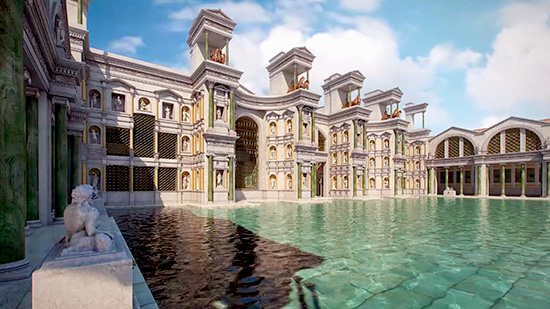
The Baths of Diocletian are the largest bathing complex ever built by ancient Rome. They were begun in 298 A.D. under Emperor Maximian and completed in 306 A.D. by Diocletian, from whom they take their name. The original area covered roughly 13 hectares — equivalent to about twenty football fields — and could accommodate up to 3,000 people at once.
Today a significant portion of the structures survives, though obscured by centuries of reuse: the frigidarium now houses the Basilica of Santa Maria degli Angeli and dei Martiri (Basilica of Saint Mary of the Angels and the Martyrs), designed by Michelangelo in 1561; another large building has become a Planetarium; the rest, with its brick vaults, gymnasiums and mosaic remnants, now comprises one of four sites of the Museo Nazionale Romano.

Many tourists pass by the Baths of Diocletian without entering, drawn instead to the Colosseum or Vatican Museums. That's a mistake. Here you see a different Rome: less crowded, more archaeological, with enormous silent halls where epigraphy, sculpture and architecture tell the story of life in the imperial capital. Personal opinion: if you've already seen the major classics, the Baths of Diocletian is the museum that will help you understand how the Romans actually lived, not just what monuments they built.
The museum itinerary is organized by thematic sections. Here's what not to miss:
The main entrance is at Viale Enrico de Nicola 78, on the Termini Station side. There is a second access point on Via Romita, on the opposite side, used mainly for groups and on special occasions. The ticket office is at the main entrance.
The Museo Nazionale Romano ticket is cumulative: with a single ticket you gain access to four sites over the course of a week. A feature often underestimated, because it transforms 8 EUR into one of the city's best value-for-money offerings.
| Type | Price | Includes | Validity |
|---|---|---|---|
| Full-price | 8 EUR | All 4 MNR sites | 1 week |
| Reduced EU 18–25 | 2 EUR | All 4 sites | 1 week |
| Under 18 | Free | — | — |
| 1st Sunday of the month | Free | — | That day only |
| Guided tour (partner) | from ~25 EUR | Admission + live guide | Booked time slot |
For the dedicated page with details on discounts, special reductions, Roma Pass and discounted categories, see our tickets guide. Prices collected from the official website museonazionaleromano.it; always verify the price at the time of purchase.
The Baths of Diocletian observe the same hours as the other sites of the Museo Nazionale Romano: Tuesday–Sunday 9:30 a.m.–7 p.m., with last admission one hour before closing. The museum is closed on Mondays, December 25 and January 1.
The best times to visit, according to those who have worked there:
The baths were built in just 8 years — a remarkable timeframe given their scale — using a mixed workforce of free laborers and persecuted Christians. The hagiographic legend attributes a significant portion of the work to the latter; historically this is likely, but sources are fragmentary. The baths remained in use for over two centuries, until the arrival of the Goths and the cutting of the aqueducts in 537 A.D., which marked their end.
For a thousand years the ruins served as a quarry for materials, shelter for animals, and pasture land. The vaults survived thanks to Roman concrete that engineers today study for its durability. Only in the sixteenth century did Pope Pius IV decide to transform the frigidarium into a basilica, entrusting the project to an eighty-seven-year-old Michelangelo.
The Museo Nazionale Romano was founded in 1889 to collect artifacts from archaeological discoveries connected to the development of the new Italian capital. The historic site of the Baths of Diocletian was chosen precisely for the continuity between container and contents: ancient monuments housing ancient objects. Today the complex is managed by the Ministry of Culture and is included in the city's main archaeological itineraries.
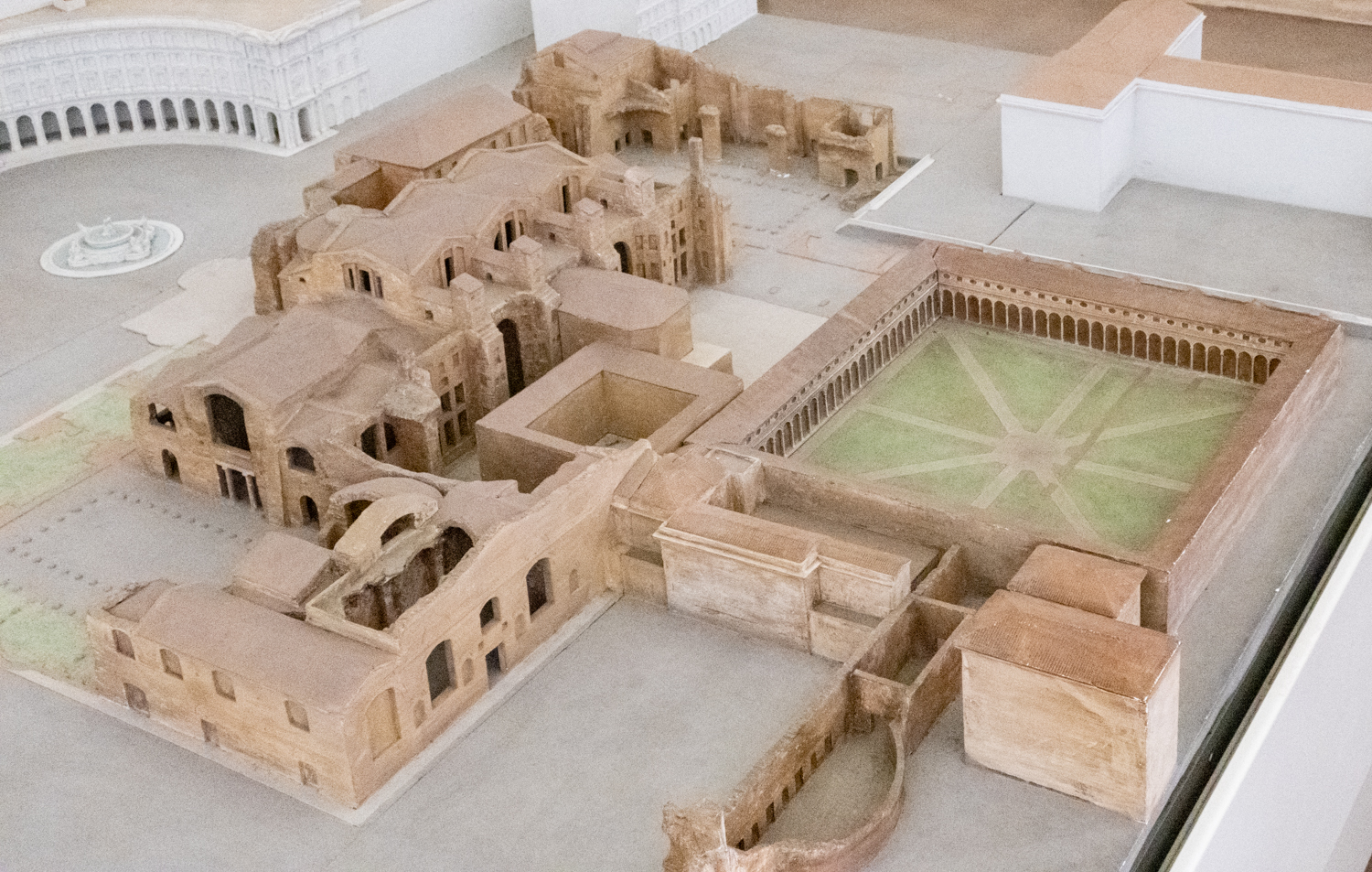
The Baths of Diocletian are one of Rome's easiest monuments to reach, as they sit literally across from the central station.
The baths are in an area that concentrates many monuments reachable on foot:
All ticket types, reductions, Roma Pass and differences between simple admission and guided tours.
See ticketsUpdated hours by day, closed days, last admission and special openings.
Check hoursInterior map of the complex, entrances, exhibition sections and accessibility.
Open mapA full-price ticket is 8 EUR, a reduced ticket 2 EUR for EU citizens aged 18–25. Admission is free for those under 18. The first Sunday of the month is free admission for everyone.
Tuesday to Sunday, 9:30 a.m.–7 p.m. Last admission one hour before closing. Closed Mondays, December 25 and January 1.
It's not mandatory, but it is recommended on weekends, holidays and in summer months. Online booking guarantees entry in your chosen time slot and shortens the queue.
Yes. With a single 8 EUR ticket you can access all four sites within 7 days: Palazzo Massimo, Palazzo Altemps and Crypta Balbi.
From 1.5 hours (essential tour) to 2.5 hours (thorough visit with epigraphy and cloisters).
Largely yes. Ramps and elevators are available. Some archaeological zones have uneven pavements. It is always possible to contact the museum for dedicated assistance.